Now Reading: Unlocking the Potential of Radar Technology
-
01
Unlocking the Potential of Radar Technology
Unlocking the Potential of Radar Technology

Radar technology, an acronym for Radio Detection and Ranging, has revolutionized the way we perceive and interact with our environment.
The fundamental principle behind radar involves transmitting radio waves that bounce off objects and return to the source, allowing for the analysis of the reflected signals.
This technology has become indispensable across various sectors, including military, aviation, meteorology, and maritime navigation. Its ability to provide real-time data has made it a cornerstone of modern surveillance and monitoring systems. The significance of radar technology extends beyond mere detection; it plays a crucial role in enhancing safety, security, and efficiency in numerous applications.
From tracking aircraft in busy airspaces to monitoring weather patterns that could impact millions, radar systems are integral to our daily lives. As we delve deeper into the history, principles, applications, and future prospects of radar technology, it becomes evident that its impact is profound and far-reaching.
Key Takeaways
- Radar technology uses radio waves to detect the presence, direction, distance, and speed of objects such as aircraft, ships, and weather formations.
- Radar technology has evolved significantly since its inception during World War II, with advancements in signal processing, antenna design, and integration with other technologies.
- The basic principle of radar involves transmitting radio waves and receiving the reflected signals to determine the location and characteristics of objects in the surrounding environment.
- Radar technology is widely used in military and defense for surveillance, target tracking, missile guidance, and battlefield management.
- Advancements in radar technology have enabled its use in weather forecasting, monitoring of natural disasters, and environmental research, providing valuable data for public safety and scientific studies.
History and Evolution of Radar Technology
The inception of radar technology can be traced back to the early 20th century, with significant advancements occurring during World War
The first practical radar systems were developed in the 1930s, primarily by British scientists who sought to detect incoming enemy aircraft. These early systems operated on relatively low frequencies and had limited range and resolution. However, as the war progressed, radar technology underwent rapid advancements, leading to improved detection capabilities and the introduction of various radar types.
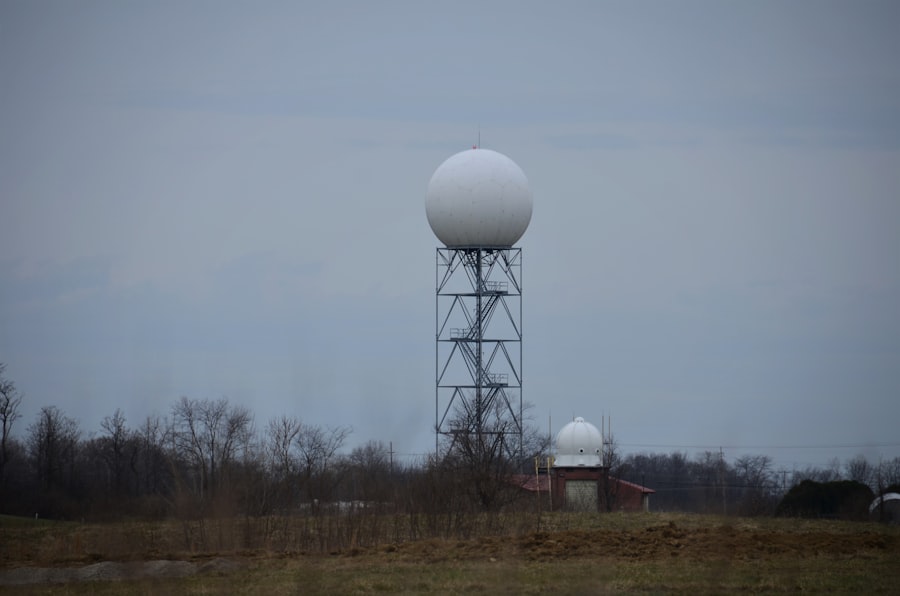
Post-war developments saw radar technology being adapted for civilian applications. The 1950s and 1960s marked a period of innovation, with the introduction of pulse-Doppler radar systems that enhanced target tracking capabilities. The advent of solid-state electronics further propelled radar technology into new realms, allowing for miniaturization and increased reliability.
By the late 20th century, advancements in digital signal processing transformed radar systems into sophisticated tools capable of providing high-resolution imagery and real-time data analysis.
Basic Principles and Functioning of Radar Systems
| Metrics | Data |
|---|---|
| Range | 10-1000 kilometers |
| Resolution | 1-100 meters |
| Accuracy | Within a few meters |
| Frequency | X-band, S-band, L-band |
| Power | 1-100 kilowatts |
At its core, radar technology operates on a simple yet effective principle: the transmission and reception of electromagnetic waves. A radar system consists of a transmitter that emits radio waves, an antenna that directs these waves toward a target, and a receiver that captures the reflected signals. The time taken for the waves to return to the source is measured, allowing for the calculation of distance based on the speed of light.
The functioning of radar systems can be categorized into several key components: waveform generation, signal transmission, echo reception, and data processing. Waveform generation involves creating specific radio frequency signals tailored for the intended application. Once transmitted, these signals interact with objects in their path, producing echoes that are captured by the receiver.
Advanced signal processing techniques are then employed to analyze these echoes, extracting valuable information such as target speed, size, and trajectory.
Applications of Radar Technology in Military and Defense
Radar technology has long been synonymous with military applications, serving as a critical tool for surveillance, reconnaissance, and target acquisition. Military radar systems are designed to detect a wide range of threats, including aircraft, missiles, and naval vessels. Ground-based radar installations provide early warning capabilities against incoming aerial attacks, while airborne radar systems enhance situational awareness for pilots during combat missions.
In addition to traditional surveillance roles, modern military radar systems incorporate advanced features such as synthetic aperture radar (SAR) and phased array technology. SAR enables high-resolution imaging of terrain and structures, making it invaluable for intelligence gathering. Phased array radar systems allow for rapid beam steering without physical movement of the antenna, facilitating tracking of fast-moving targets with precision.
Advancements in Radar Technology for Weather Forecasting and Monitoring
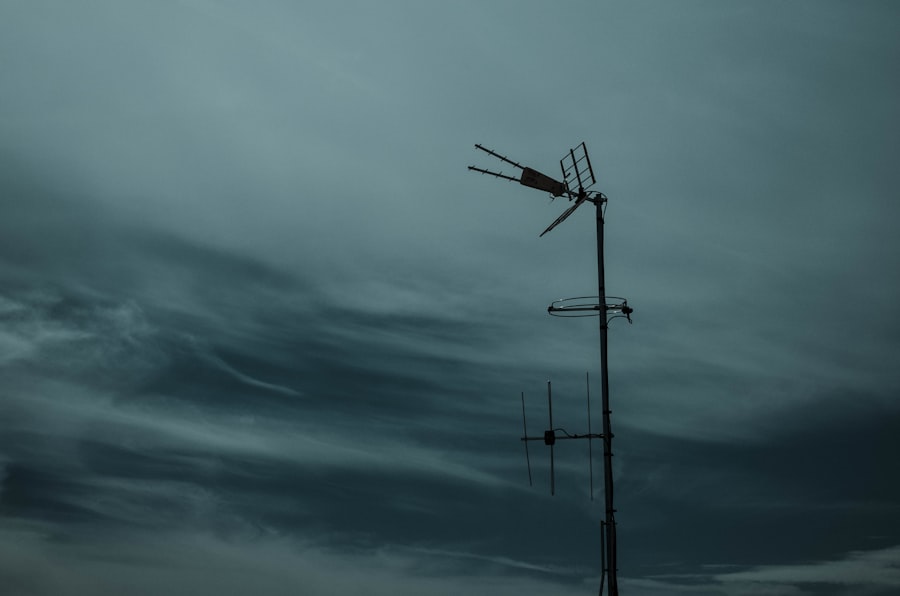
The application of radar technology in meteorology has transformed weather forecasting and monitoring practices. Doppler radar systems are particularly noteworthy for their ability to measure precipitation intensity and movement. By analyzing the frequency shift of returned signals caused by moving raindrops or snowflakes, meteorologists can assess storm dynamics in real-time.
Modern weather radars are equipped with dual-polarization capabilities that provide additional data on precipitation type and size distribution. This information is crucial for predicting severe weather events such as tornadoes or flash floods. Furthermore, advancements in data assimilation techniques have enabled meteorologists to integrate radar data with numerical weather prediction models, resulting in more accurate forecasts and timely warnings for communities at risk.
Radar Technology in Aviation and Air Traffic Control
In aviation, radar technology is paramount for ensuring safe air travel. Air traffic control (ATC) relies heavily on radar systems to monitor aircraft positions and manage airspace efficiently. Primary radar systems detect aircraft by bouncing radio waves off their surfaces, while secondary radar systems utilize transponders onboard aircraft to provide additional information such as altitude and identification.
The integration of Automatic Dependent Surveillance–Broadcast (ADS-B) technology has further enhanced situational awareness in aviation. ADS-B allows aircraft to broadcast their position and velocity information to ground stations and other aircraft in real-time. This capability not only improves safety but also optimizes air traffic flow by enabling more efficient routing and spacing between aircraft.
Maritime navigation has greatly benefited from advancements in radar technology. Marine radar systems are essential for vessel tracking, collision avoidance, and navigation in challenging conditions such as fog or heavy rain. These systems provide real-time information about nearby vessels, navigational hazards, and coastline features.
Modern marine radars often incorporate features such as Automatic Identification System (AIS) integration, which enhances situational awareness by displaying information about other vessels’ identities and movements. Additionally, advancements in solid-state radar technology have led to more compact and reliable systems that can withstand harsh marine environments while delivering high-resolution imagery.
Emerging Trends and Innovations in Radar Technology
The field of radar technology is continuously evolving, driven by innovations in materials science, signal processing algorithms, and artificial intelligence (AI). One notable trend is the development of millimeter-wave radar systems that operate at higher frequencies, providing improved resolution for applications such as automotive safety features like adaptive cruise control and collision avoidance. Furthermore, the integration of AI into radar systems is revolutionizing data analysis capabilities.
Machine learning algorithms can process vast amounts of radar data to identify patterns and anomalies that may indicate potential threats or operational inefficiencies. This trend is particularly relevant in defense applications where rapid decision-making is critical.
Challenges and Limitations of Radar Technology
Despite its numerous advantages, radar technology faces several challenges and limitations. One significant issue is susceptibility to interference from environmental factors such as rain, snow, or clutter from urban landscapes. These factors can degrade signal quality and affect detection accuracy.
Additionally, certain stealth technologies employed by modern military assets can reduce radar effectiveness by minimizing their radar cross-section. Another challenge lies in the complexity of data interpretation. As radar systems become more advanced and generate larger volumes of data, the need for skilled personnel capable of analyzing this information becomes paramount.
Ensuring that operators are adequately trained to interpret complex radar data is essential for maximizing operational effectiveness.
Future Prospects and Opportunities for Radar Technology
The future of radar technology holds immense potential across various sectors. As industries increasingly rely on automation and data-driven decision-making, the demand for advanced radar systems will continue to grow. In defense applications, ongoing research into quantum radar technology promises to enhance detection capabilities against stealth targets by exploiting quantum properties.
In civilian applications, the integration of radar with other sensor technologies such as LiDAR (Light Detection and Ranging) will lead to more comprehensive situational awareness solutions across industries like transportation and logistics. Furthermore, as smart cities emerge globally, radar technology will play a pivotal role in traffic management systems that optimize urban mobility while enhancing safety.
The Impact and Potential of Radar Technology
In summary, radar technology has profoundly influenced various aspects of modern life through its diverse applications in military defense, aviation safety, weather forecasting, maritime navigation, and beyond. Its ability to provide real-time data has made it an indispensable tool across multiple sectors. As we look toward the future, ongoing advancements promise to enhance its capabilities further while addressing existing challenges.
The potential for innovation within this field is vast; emerging trends such as AI integration and quantum technologies are set to redefine how we utilize radar systems. As industries continue to evolve alongside technological advancements, the impact of radar technology will undoubtedly expand further into new realms of possibility. In conclusion, understanding the intricacies of radar technology not only highlights its current significance but also underscores its potential to shape our future interactions with the world around us.
If you’re interested in learning more about radar technology and its applications, you may want to check out this article on how to make informed decisions about Amazon stock price. Just like radar technology helps us gather information and make decisions based on that data, understanding stock prices and market trends can help investors make informed choices about their investments. Both radar technology and stock market analysis involve collecting and interpreting data to make decisions that can have a significant impact.
FAQs
What is radar?
Radar stands for “Radio Detection and Ranging.” It is a system that uses radio waves to detect the presence, direction, distance, and speed of objects such as aircraft, ships, and weather formations.
How does radar work?
Radar works by transmitting radio waves and then receiving the waves that are reflected back from objects in the path of the radio waves. By analyzing the time it takes for the waves to return and the Doppler shift of the waves, radar can determine the location, speed, and direction of the objects.
What are the different types of radar?
There are several types of radar, including weather radar, air traffic control radar, military radar, and marine radar. Each type is designed for specific applications such as monitoring weather patterns, guiding aircraft, detecting enemy targets, and navigating ships.
What are the main components of a radar system?
The main components of a radar system include a transmitter, a receiver, an antenna, a signal processor, and a display. The transmitter generates the radio waves, the antenna sends out the waves and receives the reflected waves, the receiver amplifies and processes the received signals, the signal processor analyzes the data, and the display presents the information to the operator.
What are the applications of radar?
Radar has a wide range of applications, including weather monitoring, air traffic control, military defense, navigation for ships and aircraft, speed enforcement by law enforcement, and mapping of terrain and natural resources.