Now Reading: United States: A Patriotic Journey 🇺🇸
-
01
United States: A Patriotic Journey 🇺🇸
United States: A Patriotic Journey 🇺🇸

The genesis of the United States of America is a tale steeped in the struggle for autonomy and self-governance. In the early 18th century, thirteen British colonies flourished along the Atlantic seaboard, each with its own unique identity and governance. However, as the colonies grew economically and culturally, they began to chafe under the heavy hand of British rule.
The imposition of taxes without representation, such as the Stamp Act of 1765 and the Townshend Acts of 1767, ignited a fervent desire for independence among the colonists. This burgeoning sentiment was not merely a reaction to economic grievances; it was also fueled by Enlightenment ideals advocating for individual rights and liberties. The culmination of these tensions led to the Declaration of Independence in 1776, a seminal document authored primarily by Thomas Jefferson.
This declaration articulated the colonies’ grievances against King George III and asserted their right to self-determination. The phrase “life, liberty, and the pursuit of happiness” became a rallying cry for those seeking freedom from oppression. The birth of a nation was not merely a political event; it represented a profound ideological shift that would influence democratic movements worldwide.
Key Takeaways
- The birth of the United States from colonies to independence marked a significant turning point in history, leading to the formation of a new nation.
- The Revolutionary War was a pivotal moment in American history, as the colonists fought for their freedom and independence from British rule.
- The Founding Fathers played a crucial role in crafting the Constitution, laying the foundation for the American government and its principles.
- Manifest Destiny drove the expansion of the nation westward, shaping the future of the United States and its territories.
- The Civil War highlighted the deep divisions within the nation and ultimately led to the abolition of slavery, reshaping the country’s social and political landscape.
The Revolutionary War: Fighting for Freedom
The Revolutionary War, which erupted in 1775, was a crucible that tested the resolve and unity of the American colonies. The conflict pitted the colonists against one of the most formidable military powers of the time, Great Britain.
The latter battle, in particular, marked a turning point in the war, as it convinced France to ally with the American cause, providing crucial military support. The war was characterized by not only military engagements but also significant ideological battles. The Continental Congress emerged as a governing body, coordinating efforts among the colonies and fostering a sense of national identity.
The hardships endured by soldiers and civilians alike—ranging from food shortages to brutal winters—further solidified their commitment to independence. Ultimately, the war concluded with the Treaty of Paris in 1783, which recognized American sovereignty and laid the groundwork for a new nation.
The Founding Fathers: Crafting the Constitution

In the aftermath of independence, the fledgling nation faced the daunting task of establishing a functional government. The Founding Fathers—visionaries such as George Washington, James Madison, Alexander Hamilton, and Benjamin Franklin—gathered in Philadelphia in 1787 to draft the United States Constitution. This document would serve as the bedrock of American governance, embodying principles such as separation of powers, checks and balances, and federalism.
The Constitutional Convention was marked by intense debates over representation, slavery, and states’ rights. The Great Compromise ultimately established a bicameral legislature, balancing the interests of populous states with those of smaller ones. Additionally, the inclusion of the Bill of Rights in 1791 ensured that individual liberties would be protected from government overreach.
This foundational framework not only defined the structure of American government but also inspired democratic movements around the globe.
Manifest Destiny: Expanding the Nation
| Year | Land Acquired (sq. miles) | Population Growth |
|---|---|---|
| 1803 | 828,000 | 2.2 million |
| 1819 | 42,000 | 9.6 million |
| 1845 | 529,911 | 17.1 million |
| 1848 | 529,911 | 23.1 million |
The 19th century ushered in an era known as Manifest Destiny, a belief that it was America’s divine right to expand its territory across North America. This ideology fueled westward expansion and led to significant territorial acquisitions, including the Louisiana Purchase in 1803 and the annexation of Texas in 1845. The concept was rooted in a sense of American exceptionalism and a desire to spread democracy and civilization.
However, this expansion came at a tremendous cost. The displacement of Native American tribes and conflicts such as the Mexican-American War (1846-1848) highlighted the darker aspects of Manifest Destiny. As settlers moved westward, they encountered diverse cultures and ecosystems, leading to both cultural exchange and violent confrontations.
The legacy of this period is complex; while it contributed to America’s growth as a continental power, it also sowed seeds of division that would later culminate in civil strife.
The Civil War: A Divided Nation
The Civil War (1861-1865) stands as one of the most pivotal moments in American history, arising from deep-seated divisions over slavery and states’ rights. Tensions escalated following the election of Abraham Lincoln in 1860, prompting several Southern states to secede from the Union. The conflict was marked by significant battles such as Gettysburg and Antietam, which underscored both the brutality of war and the stakes involved in preserving the Union.
The Emancipation Proclamation issued by Lincoln in 1863 transformed the war’s purpose from merely preserving the Union to also abolishing slavery. This shift galvanized abolitionist sentiments and paved the way for the eventual passage of the Thirteenth Amendment in 1865, which formally abolished slavery in the United States. The war concluded with General Robert E.
Lee’s surrender at Appomattox Court House, but its aftermath left scars that would take generations to heal.
World Wars: America on the Global Stage
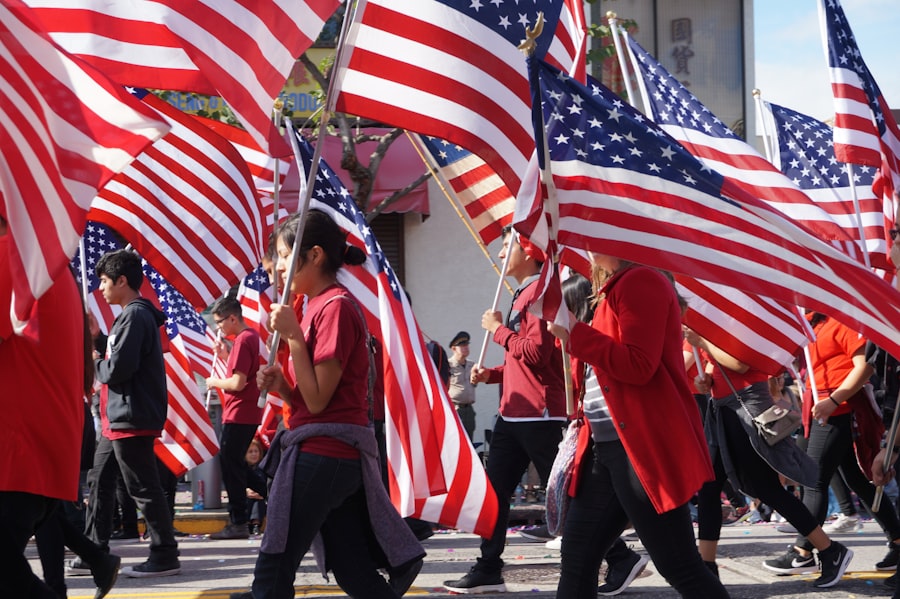
The early 20th century marked America’s emergence as a global power through its involvement in World War I and World War
Initially reluctant to engage in international conflicts, America was drawn into World War I following attacks on American ships by German submarines. The U.S. entry into the war in 1917 provided a much-needed boost to Allied forces and ultimately contributed to their victory.
World War II further solidified America’s status on the world stage. Following Japan’s attack on Pearl Harbor in 1941, America mobilized its vast industrial resources and manpower to fight against Axis powers. Key battles such as Midway and D-Day showcased American military prowess and strategic planning.
The war concluded with Japan’s surrender following the atomic bombings of Hiroshima and Nagasaki in 1945, leading to a new era defined by Cold War tensions but also marked by America’s commitment to rebuilding Europe through initiatives like the Marshall Plan.
The Civil Rights Movement: Striving for Equality
The mid-20th century witnessed a profound struggle for civil rights as marginalized groups sought equality under the law. The Civil Rights Movement emerged as a powerful force challenging systemic racism and discrimination against African Americans. Leaders such as Martin Luther King Jr., Rosa Parks, and Malcolm X galvanized public support through peaceful protests, legal challenges, and grassroots organizing.
Landmark events such as the Montgomery Bus Boycott (1955) and the March on Washington (1963) highlighted both the urgency and moral imperative for change. The passage of pivotal legislation like the Civil Rights Act of 1964 and the Voting Rights Act of 1965 marked significant victories in dismantling institutionalized racism. However, while progress was made, ongoing struggles for equality continue to resonate within contemporary society.
The Space Race: Reaching for the Stars
The Space Race epitomized Cold War competition between the United States and Soviet Union during the latter half of the 20th century. Following Russia’s launch of Sputnik in 1957, America recognized the need to assert its technological prowess on a global scale. NASA was established in response to this challenge, leading to significant advancements in space exploration.
The crowning achievement came on July 20, 1969, when Apollo 11 successfully landed astronauts Neil Armstrong and Buzz Aldrin on the lunar surface. Armstrong’s famous words—”That’s one small step for man, one giant leap for mankind”—symbolized not only American ingenuity but also humanity’s quest for knowledge beyond Earth. The Space Race fostered scientific innovation and inspired generations to pursue careers in science, technology, engineering, and mathematics (STEM).
9/11: A Nation United in Tragedy
The terrorist attacks on September 11, 2001, marked a watershed moment in American history that reshaped national security policies and public consciousness. Coordinated attacks by al-Qaeda resulted in nearly 3,000 fatalities and left an indelible mark on American society. In response to this unprecedented tragedy, Americans rallied together in solidarity, demonstrating resilience amid grief.
The aftermath prompted significant changes in domestic security measures through legislation such as the USA PATRIOT Act and led to military interventions in Afghanistan aimed at dismantling terrorist networks. While these actions were framed as necessary for national security, they also sparked debates about civil liberties and government overreach that continue to resonate today.
American Values: Freedom, Democracy, and Opportunity
At its core, America is defined by its foundational values: freedom, democracy, and opportunity. These principles have guided national policies and shaped societal norms throughout history. Freedom encompasses not only individual liberties but also collective rights; democracy emphasizes participation in governance; while opportunity reflects America’s promise that hard work can lead to success regardless of one’s background.
These values have been tested throughout history but remain central to America’s identity. Ongoing discussions about immigration reform, economic inequality, and social justice highlight both challenges and aspirations inherent within these ideals. As America continues to evolve, its commitment to these core values will be crucial in navigating future complexities.
The Future of America: Continuing the Patriotic Journey
As America stands at a crossroads in its history, it faces numerous challenges that require collective action and innovative solutions. Issues such as climate change, economic disparity, healthcare access, and social justice demand urgent attention from policymakers and citizens alike. Engaging younger generations through education and civic participation will be vital for sustaining democratic ideals.
Looking ahead, America must embrace its diversity as a strength rather than a division. By fostering inclusivity and collaboration across various sectors—governmental, private, and non-profit—there lies potential for transformative change that honors both historical legacies and future aspirations. The journey toward realizing America’s promise is ongoing; it requires vigilance, commitment, and an unwavering belief in progress.
In summary, America’s history is characterized by struggles for independence, civil rights, global engagement, and an enduring quest for equality and opportunity. From its birth as a nation through pivotal moments like wars and social movements to its current challenges, America continues to evolve while striving to uphold its foundational values of freedom and democracy for all citizens.
This decision marks an important step towards recognizing and commemorating the end of slavery in the United States. To learn more about federal holidays and their impact on employees, check out this informative article on federal government holidays.
FAQs
What are the colors of the USA flag?
The USA flag consists of three colors: red, white, and blue.
How many stars are on the USA flag?
There are 50 stars on the USA flag, each representing one of the 50 states in the country.
How many stripes are on the USA flag?
There are 13 stripes on the USA flag, representing the original 13 colonies that declared independence from Britain.
What do the colors and symbols on the USA flag represent?
The red symbolizes valor and bravery, the white symbolizes purity and innocence, and the blue symbolizes vigilance, perseverance, and justice. The stars represent the states, and the stripes represent the original colonies.
When was the current design of the USA flag adopted?
The current design of the USA flag, with 50 stars and 13 stripes, was adopted on July 4, 1960, after Hawaii became the 50th state to join the union.
Can the USA flag be flown at night?
Yes, the USA flag can be flown at night as long as it is illuminated.
What is the proper way to display the USA flag?
The USA flag should be displayed with the union (the blue field with the stars) at the peak of the staff when flown on a flagpole. When displayed horizontally or vertically against a wall, the union should be in the upper left corner.