
Now Reading: Creamy Risotto: A Delicious Italian Comfort Food
-
01
Creamy Risotto: A Delicious Italian Comfort Food
Creamy Risotto: A Delicious Italian Comfort Food

Risotto is a traditional Italian rice dish that originated in the northern regions of Lombardy and Piedmont, where rice cultivation has been practiced since the 14th century. Historical records indicate that rice was introduced to Italy during this period, though the exact origins remain debated among food historians.
The development of risotto as a cooking technique evolved gradually from simple rice preparations. Early versions were basic porridge-like dishes that utilized locally grown rice. Over several centuries, cooking methods became more refined, incorporating techniques such as gradual broth addition and constant stirring to achieve the characteristic creamy texture without using cream.
Regional variations of risotto emerged based on local ingredients and culinary traditions. Risotto alla Milanese, which incorporates saffron, became associated with Milan and the surrounding Lombardy region. Coastal areas developed seafood-based versions, including Risotto al Nero di Seppia, which uses squid ink.
Other notable regional varieties include Risotto ai Porcini from areas with abundant mushroom harvests and Risotto all’Amarone from the Veneto wine region. The dish gained broader recognition beyond its regional origins during the 19th and 20th centuries as Italian cuisine spread internationally. Modern risotto preparation follows established techniques involving specific rice varieties, typically Arborio, Carnaroli, or Vialone Nano, which contain high starch content necessary for achieving the proper texture.
Key Takeaways
- Risotto is a traditional Italian dish known for its creamy texture and rich history.
- Using the right rice, such as Arborio or Carnaroli, is essential for achieving the perfect creaminess.
- Quality stock and careful stirring are key to developing risotto’s signature smooth consistency.
- Adding aromatics, herbs, and cheese enhances flavor and richness in the dish.
- Risotto pairs well with specific wines and can be creatively varied or repurposed for leftovers.
The Basics of Making a Creamy Risotto
Creating a creamy risotto is an art that requires attention to detail and a few essential techniques. The foundation of this dish lies in its cooking method, which involves slowly simmering rice while gradually adding liquid. This process allows the starches in the rice to release, resulting in a velvety texture that is characteristic of a well-made risotto.
The key to achieving this creaminess is to use short-grain rice varieties, which have a higher starch content compared to long-grain varieties. To begin, one must sauté aromatics such as onions or shallots in olive oil or butter until they become translucent. This step not only enhances the flavor profile but also sets the stage for the rice.
Once the aromatics are ready, add the rice and toast it briefly to infuse it with flavor. Following this, deglaze the pan with white wine, allowing it to evaporate before gradually incorporating warm stock. Stirring continuously is crucial during this phase, as it encourages even cooking and prevents the rice from sticking to the bottom of the pot.
Choosing the Right Rice for Your Risotto

Selecting the appropriate rice is paramount when crafting a perfect risotto. The most commonly used varieties include Arborio, Carnaroli, and Vialone Nano. Arborio rice is perhaps the most recognized type due to its widespread availability and ability to absorb flavors while maintaining a firm texture.
Its plump grains release starch during cooking, contributing to the dish’s creaminess. Carnaroli rice is often hailed as the “king” of risotto rice due to its superior quality and higher starch content.
Vialone Nano, on the other hand, is prized for its ability to absorb liquid while retaining its shape, making it an excellent choice for those seeking a more al dente texture. Each variety brings its unique characteristics to the dish, allowing chefs to tailor their risotto according to personal preferences.
The Importance of Stock in Creating a Creamy Risotto
The choice of stock plays a pivotal role in determining the flavor profile of risotto. A well-made stock enhances the overall taste and richness of the dish. Traditionally, homemade chicken or vegetable stock is preferred, as it provides a depth of flavor that complements the rice without overpowering it.
Using store-bought stock can be convenient; however, it is essential to select high-quality options with minimal additives. When preparing risotto, it is advisable to keep the stock warm in a separate pot on low heat. This practice ensures that the temperature remains consistent throughout the cooking process, allowing for even absorption by the rice.
Gradually adding stock—typically one ladle at a time—enables better control over the cooking process and helps achieve that desired creamy consistency. The gradual incorporation of liquid also allows for optimal starch release from the rice grains.
Adding Flavor with Aromatics and Herbs
| Metric | Value | Unit |
|---|---|---|
| Average Cooking Time | 18-20 | minutes |
| Main Ingredient | Arborio Rice | – |
| Typical Serving Size | 150-200 | grams |
| Calories per Serving | 300-400 | kcal |
| Protein Content | 7-9 | grams |
| Fat Content | 8-12 | grams |
| Carbohydrate Content | 45-55 | grams |
| Common Flavor Additions | Mushrooms, Parmesan, Saffron, Seafood | – |
Aromatics and herbs are integral components that elevate risotto from a simple dish to a culinary masterpiece. Onions and garlic are classic choices that provide a robust base flavor when sautéed at the beginning of the cooking process. Shallots can also be used for a milder sweetness that complements various ingredients.
In addition to these foundational flavors, fresh herbs such as thyme, rosemary, or parsley can be incorporated towards the end of cooking for an aromatic finish. Saffron is another popular addition that imparts both color and a unique flavor profile to dishes like Risotto alla Milanese. For those seeking an umami boost, consider adding mushrooms or sun-dried tomatoes during cooking.
These ingredients not only enhance flavor but also contribute visual appeal to the final presentation.
The Art of Stirring: Achieving the Perfect Creamy Texture
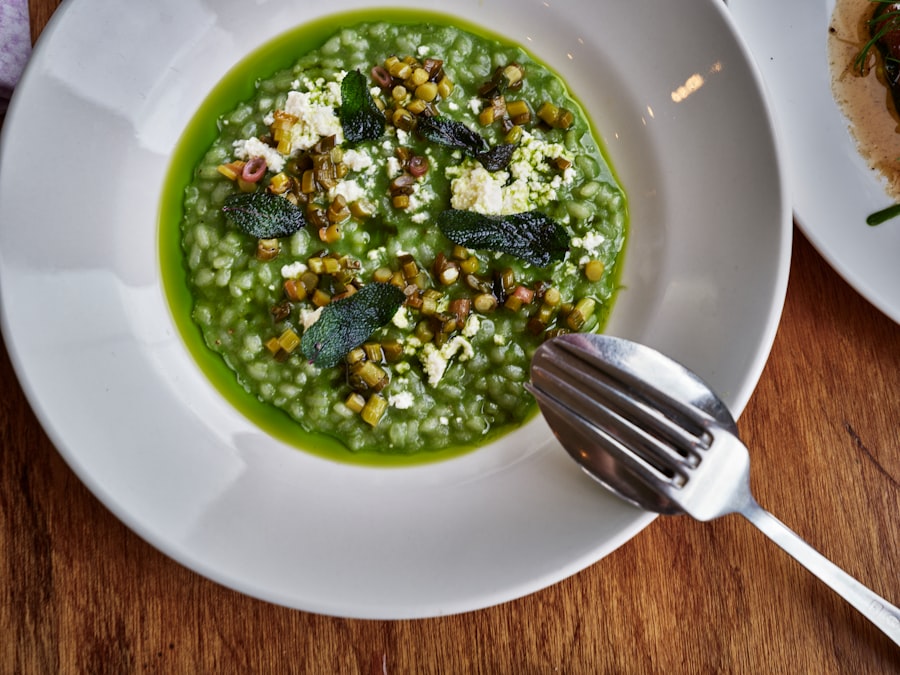
Stirring is an essential technique in risotto preparation that directly influences its texture. Continuous stirring encourages even cooking and promotes starch release from the rice grains, resulting in that signature creaminess. It is important to use a wooden spoon or silicone spatula to gently stir without breaking the grains.
The frequency of stirring can vary depending on personal preference; some chefs prefer constant stirring while others may opt for occasional stirring combined with gentle folding motions. Regardless of technique, patience is key—allowing each ladle of stock to be absorbed before adding more ensures that the rice cooks evenly and achieves that perfect al dente bite.
Incorporating Cheese for an Extra Creamy Finish
Cheese is often regarded as the finishing touch that elevates risotto to new heights of creaminess and flavor complexity. Parmigiano-Reggiano is the traditional choice; its nutty flavor and granular texture meld beautifully with risotto when stirred in at the end of cooking. Grating fresh cheese directly into the pot allows it to melt seamlessly into the dish.
For those seeking additional richness, consider incorporating mascarpone or cream cheese alongside Parmigiano-Reggiano for an ultra-creamy finish. Alternatively, experimenting with other cheeses such as goat cheese or Gorgonzola can introduce unique flavor profiles that complement various ingredients within your risotto.
Elevating Your Risotto with Fresh Ingredients
Fresh ingredients are essential for creating vibrant and flavorful risottos that celebrate seasonal produce. Incorporating vegetables such as asparagus, peas, or spinach not only adds color but also enhances nutritional value. These ingredients can be sautéed briefly before being added to the risotto during the final stages of cooking.
Proteins such as shrimp, scallops, or chicken can also be integrated into risottos for added substance. Cooking these proteins separately and folding them into the finished dish ensures they remain tender and flavorful without overcooking during the risotto preparation process. Additionally, garnishing with fresh herbs or microgreens just before serving adds an appealing visual element while enhancing flavor.
Pairing Creamy Risotto with the Perfect Wine
Wine pairing can significantly enhance the dining experience when enjoying creamy risotto. A well-chosen wine complements both flavors and textures within the dish while balancing its richness. For seafood-based risottos, consider pairing with a crisp white wine such as Pinot Grigio or Sauvignon Blanc; their acidity cuts through creaminess while accentuating delicate flavors.
For meatier variations like mushroom or saffron risottos, opt for fuller-bodied whites like Chardonnay or even light reds such as Pinot Noir. These wines provide depth without overwhelming the dish’s subtleties. Ultimately, personal preference plays a significant role in wine selection; experimenting with different pairings can lead to delightful discoveries.
Creative Variations on the Classic Creamy Risotto Recipe
While traditional risotto recipes hold a special place in culinary hearts, creativity knows no bounds when it comes to variations on this classic dish. Consider incorporating global flavors by adding ingredients such as coconut milk for an Asian-inspired twist or using curry spices for an Indian flair. Vegetarian options abound as well; try incorporating roasted butternut squash or beet puree for vibrant color and sweetness.
For those seeking indulgence, truffle oil drizzled over finished risotto adds an aromatic touch that elevates any dish to gourmet status. The possibilities are endless—experimenting with different ingredients allows home cooks to personalize their risottos according to taste preferences.
Tips for Reheating and Repurposing Leftover Risotto
Leftover risotto can be transformed into delightful new dishes rather than simply reheating it in its original form. To reheat risotto effectively without sacrificing texture or flavor, add a splash of warm stock or water while gently stirring over low heat until warmed through. Alternatively, consider repurposing leftover risotto into arancini—Italian rice balls coated in breadcrumbs and fried until golden brown—creating a delicious appetizer or snack option.
Another option is to incorporate leftover risotto into frittatas or casseroles for added substance and flavor. In summary, risotto is not merely a dish; it embodies Italian culinary tradition steeped in history and artistry. Mastering its preparation involves understanding key elements such as rice selection, stock quality, stirring techniques, and ingredient combinations—all contributing to achieving that coveted creamy texture.
With endless possibilities for variations and pairings available, risotto remains a versatile canvas for culinary creativity while offering comfort and satisfaction at every bite.
If you’re looking to elevate your culinary skills, mastering the art of risotto is a fantastic choice. This creamy Italian dish is not only versatile but also a great way to impress your guests. For those interested in exploring more about the cultural significance of various celebrations, you might find this article on honoring our leaders on Presidents’ Day intriguing, as it highlights the importance of tradition, much like the cherished recipes passed down through generations.
FAQs
What is risotto?
Risotto is a traditional Italian dish made from Arborio or other short-grain rice cooked slowly in broth until it reaches a creamy consistency. It often includes ingredients like onions, butter, white wine, and Parmesan cheese.
What type of rice is best for making risotto?
The best rice for risotto is Arborio, Carnaroli, or Vialone Nano. These varieties have a high starch content, which helps create the creamy texture characteristic of risotto.
How is risotto traditionally cooked?
Risotto is traditionally cooked by sautéing onions in butter or oil, adding the rice to toast it lightly, then gradually adding warm broth while stirring continuously until the rice is tender and creamy.
Can risotto be made without wine?
Yes, risotto can be made without wine. While white wine is commonly used to add flavor, it can be omitted or replaced with additional broth or a splash of lemon juice.
What are common ingredients added to risotto?
Common ingredients include mushrooms, seafood, vegetables, saffron, herbs, and cheeses like Parmesan. The choice of ingredients varies widely depending on regional recipes and personal preferences.
Is risotto gluten-free?
Yes, risotto is naturally gluten-free as it is made from rice and broth. However, it is important to ensure that all added ingredients and broth are also gluten-free.
How long does it take to cook risotto?
Cooking risotto typically takes about 18 to 25 minutes from the time you start adding broth to the rice, depending on the rice variety and recipe.
Can risotto be reheated?
Yes, risotto can be reheated, but it may lose some of its creamy texture. Adding a little broth or water while reheating can help restore its consistency.
What is the difference between risotto and plain cooked rice?
The main difference is that risotto is cooked slowly with continuous stirring and gradual addition of broth, which releases starch and creates a creamy texture, whereas plain rice is usually boiled or steamed without stirring.


