
Now Reading: The Impact of Trump’s Tariffs on Global Trade
-
01
The Impact of Trump’s Tariffs on Global Trade
The Impact of Trump’s Tariffs on Global Trade

The imposition of tariffs under the Trump administration marked a significant shift in U.S. trade policy, characterized by a more protectionist approach aimed at reshaping the dynamics of international trade. Initiated in 2018, these tariffs primarily targeted China, with the intention of addressing trade imbalances and protecting American industries from what was perceived as unfair competition.
The tariffs were not merely a tool for revenue generation; they were part of a broader strategy to renegotiate trade agreements and bolster domestic manufacturing. The administration’s rationale hinged on the belief that tariffs would incentivize American consumers to purchase domestically produced goods, thereby stimulating local economies. The tariffs encompassed a wide range of products, including steel, aluminum, and various consumer goods, leading to a cascade of retaliatory measures from affected countries.
This trade war not only altered the landscape of U.S.-China relations but also reverberated across global markets, prompting discussions about the future of free trade and the implications for international economic cooperation. As nations grappled with the consequences of these tariffs, the complexities of global supply chains became increasingly apparent, revealing vulnerabilities that had previously gone unnoticed.
Key Takeaways
- Trump’s tariffs have sparked global debate and concern over their impact on international trade and economic relations.
- Global supply chains have been disrupted, leading to increased costs and delays in production and distribution.
- International trade agreements have been strained as countries retaliate with their own tariffs, leading to trade tensions and uncertainty.
- Import and export trends have shifted as countries seek alternative markets and sources for goods and services.
- Developing countries have been particularly hard hit by the tariffs, facing economic challenges and potential long-term consequences.
The Effect on Global Supply Chains
The introduction of tariffs significantly disrupted established global supply chains, which had been optimized for efficiency and cost-effectiveness over decades. Companies that relied on international sourcing faced immediate challenges as tariffs increased the cost of imported materials and components. For instance, manufacturers in the United States that depended on Chinese steel and aluminum found themselves grappling with higher production costs, which ultimately affected their pricing strategies and profit margins.
This disruption forced many businesses to reevaluate their supply chain strategies, leading to a search for alternative suppliers or even a shift towards domestic production. Moreover, the uncertainty surrounding tariff policies created an environment of unpredictability that hampered long-term planning for many firms. Companies were compelled to invest in risk management strategies to mitigate potential losses associated with fluctuating tariffs.
This included diversifying supply sources, increasing inventory levels, and even relocating production facilities closer to home markets. The ripple effects of these changes extended beyond individual companies; entire industries faced reconfiguration as businesses sought to adapt to a new reality characterized by heightened trade barriers.
Impact on International Trade Agreements
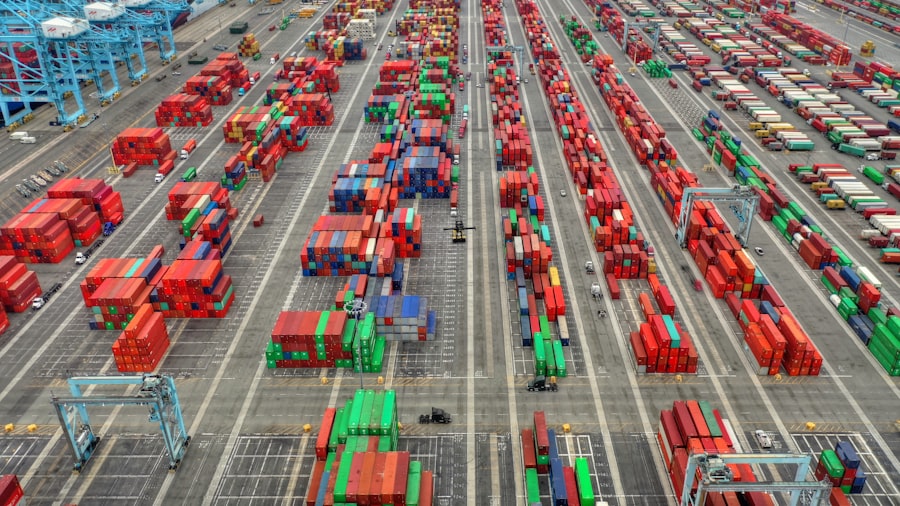
Trump’s tariffs had profound implications for existing international trade agreements and negotiations for new ones. The administration’s unilateral approach to imposing tariffs strained relationships with traditional allies and partners, leading to a reevaluation of multilateral trade frameworks. For example, the North American Free Trade Agreement (NAFTA) was renegotiated into the United States-Mexico-Canada Agreement (USMCA), with significant changes aimed at addressing perceived imbalances in trade flows.
The new agreement included provisions designed to increase U.S. agricultural exports and strengthen labor protections, reflecting the administration’s focus on domestic interests. Additionally, the tariffs prompted other nations to reconsider their trade strategies and alliances.
Countries affected by U.S. tariffs sought to strengthen ties with one another, leading to new trade agreements that aimed to counterbalance American influence. The Comprehensive and Progressive Agreement for Trans-Pacific Partnership (CPTPP) emerged as a notable example, as member countries sought to enhance economic cooperation in the Asia-Pacific region without U.S.
participation. This shift underscored the potential for a reconfiguration of global trade networks in response to changing geopolitical dynamics.
Changes in Import and Export Trends
| Year | Import Volume (in tons) | Export Volume (in tons) |
|---|---|---|
| 2018 | 5000 | 3000 |
| 2019 | 5500 | 3200 |
| 2020 | 4800 | 3100 |
The imposition of tariffs led to notable shifts in import and export trends across various sectors. In the short term, U.S. imports from China experienced a decline as tariffs made these goods more expensive for American consumers and businesses.
Conversely, some countries saw an increase in exports to the United States as companies sought alternative sources for products previously imported from China. For instance, countries like Vietnam and Mexico capitalized on this opportunity, experiencing significant growth in their export volumes to the U.S. market.
However, these changes were not without consequences. While some industries benefited from reduced competition from Chinese imports, others faced challenges due to increased costs associated with sourcing materials from alternative suppliers. The overall effect on trade balances was complex; while certain sectors experienced growth, others struggled to adapt to the new tariff landscape.
This dynamic underscored the interconnectedness of global markets and highlighted the need for businesses to remain agile in response to evolving trade conditions.
Economic Impact on Developing Countries
The economic ramifications of Trump’s tariffs extended beyond developed nations, significantly impacting developing countries that relied on exports to the United States. Many of these nations faced reduced demand for their goods as American consumers shifted their purchasing habits in response to higher prices resulting from tariffs. For instance, countries heavily dependent on agricultural exports found themselves grappling with declining sales as U.S.
farmers sought protection from foreign competition. Moreover, developing countries that had established supply chains with China faced additional challenges as tariffs disrupted their access to essential components and materials. This created a cascading effect that hindered economic growth and development efforts in these regions.
As a result, many developing nations were compelled to seek new markets or diversify their economies to mitigate the adverse effects of U.S. trade policies.
Response from Major Trading Partners

In response to Trump’s tariffs, major trading partners implemented retaliatory measures aimed at protecting their own economic interests. Countries such as Canada, Mexico, and members of the European Union imposed tariffs on a range of U.
goods, targeting industries such as agriculture and manufacturing.
This tit-for-tat approach escalated tensions and further complicated international trade relations. The retaliatory tariffs not only affected U.S.
Companies faced increased costs associated with navigating complex tariff structures and adapting their supply chains accordingly. The situation prompted calls for dialogue and negotiation among trading partners to resolve disputes and restore stability to global markets.
Shifts in Market Prices and Consumer Behavior
The introduction of tariffs led to noticeable shifts in market prices across various sectors, influencing consumer behavior in significant ways. As import costs rose due to tariffs, many businesses passed these expenses onto consumers in the form of higher prices for goods ranging from electronics to household items. This price inflation prompted consumers to reevaluate their purchasing decisions, leading some to seek alternatives or delay purchases altogether.
Additionally, consumer sentiment shifted as individuals became more aware of the implications of tariffs on their everyday lives. The perception of rising prices and potential shortages influenced buying patterns, with some consumers opting for domestically produced goods as a means of supporting local industries. This shift highlighted the interconnectedness between trade policy and consumer behavior, underscoring the importance of understanding market dynamics in an era of heightened protectionism.
Challenges for Domestic Industries
While some domestic industries benefited from reduced competition due to tariffs, others faced significant challenges as they navigated a rapidly changing economic landscape. Industries reliant on imported materials found themselves grappling with increased production costs, which threatened their competitiveness both domestically and internationally. For example, manufacturers in sectors such as automotive and electronics experienced pressure as they sought to balance rising input costs with consumer demand for affordable products.
Moreover, the uncertainty surrounding tariff policies created an environment of instability that hindered long-term investment decisions for many businesses. Companies were often reluctant to commit resources to expansion or innovation when faced with unpredictable trade conditions. This hesitancy had broader implications for economic growth, as industries struggled to adapt to a landscape characterized by shifting market dynamics.
Potential Long-term Consequences
The long-term consequences of Trump’s tariffs remain uncertain but are likely to shape the future of international trade for years to come. One potential outcome is a reconfiguration of global supply chains as companies seek greater resilience in response to tariff-induced disruptions. Businesses may prioritize diversification and localization strategies to mitigate risks associated with reliance on specific markets or suppliers.
Additionally, the rise of protectionist policies could lead to increased fragmentation in global trade networks, potentially undermining decades of progress toward free trade agreements and economic cooperation among nations. As countries pursue self-sufficiency and prioritize domestic industries, the interconnectedness that has characterized globalization may be challenged.
Strategies for Adapting to Tariff Changes
In light of the evolving tariff landscape, businesses must adopt proactive strategies to navigate challenges effectively. Diversification of supply chains is paramount; companies should explore alternative sourcing options and consider reshoring production where feasible. Investing in technology and automation can enhance efficiency and reduce reliance on labor-intensive processes that may be vulnerable to tariff fluctuations.
Furthermore, companies should engage in continuous monitoring of tariff policies and market trends to remain agile in their decision-making processes. Building strong relationships with suppliers and customers can foster collaboration and innovation, enabling businesses to adapt more effectively to changing conditions.
The Role of Tariffs in Geopolitical Relations
Tariffs play a crucial role in shaping geopolitical relations among nations, serving as both tools for negotiation and instruments of economic warfare. The imposition of tariffs can signal broader political intentions and influence diplomatic relations between countries. As nations navigate complex interdependencies within global markets, understanding the geopolitical implications of tariff policies becomes essential for policymakers and business leaders alike.
In conclusion, Trump’s tariffs have had far-reaching effects on global supply chains, international trade agreements, import-export trends, developing economies, and domestic industries alike. As nations respond strategically to these changes, it is imperative for businesses to remain adaptable while policymakers consider the long-term consequences of protectionist measures on global economic stability and cooperation.
In light of President’s Day, it is important to consider the impact of our nation’s leaders on current policies, such as Trump’s tariffs. These tariffs have sparked debates and discussions on their effectiveness and consequences. For more information on how tariffs can affect the economy, check out this insightful article on boogger.com.
FAQs
What are Trump tariffs?
Trump tariffs refer to the trade policies implemented by the administration of former President Donald Trump, which involved imposing tariffs on various imported goods from other countries.
Why did Trump impose tariffs?
The Trump administration imposed tariffs as part of its efforts to address what it perceived as unfair trade practices by other countries, particularly China. The administration aimed to protect American industries and jobs by reducing the trade deficit and promoting domestic manufacturing.
Which countries were affected by Trump tariffs?
The Trump tariffs primarily targeted China, but also impacted other countries such as Canada, Mexico, the European Union, and others.
What goods were subject to Trump tariffs?
A wide range of goods were subject to Trump tariffs, including steel, aluminum, solar panels, washing machines, and various other products from different industries.
What was the impact of Trump tariffs?
The impact of Trump tariffs varied, but they led to increased costs for businesses and consumers, disrupted global supply chains, and triggered retaliatory tariffs from other countries. Some industries experienced benefits from the tariffs, while others faced challenges.
Did Trump tariffs lead to any trade agreements?
The Trump administration negotiated trade agreements with some countries, such as the United States-Mexico-Canada Agreement (USMCA), which replaced the North American Free Trade Agreement (NAFTA). However, the tariffs also strained relations with trading partners and led to ongoing trade disputes.


