
Now Reading: The most well-known figures in America
-
01
The most well-known figures in America
The most well-known figures in America

America’s history and culture are shaped by many well-known figures whose contributions have made a significant impact. Historical icons like George Washington, who led the fight for independence, and Abraham Lincoln, who preserved the Union during the Civil War while striving to end slavery, set foundational principles for the nation. In civil rights activism, Martin Luther King Jr. and Susan B. Anthony championed equality and women’s suffrage respectively. Contemporary leaders such as Barack Obama pushed boundaries in politics; Oprah Winfrey transformed media into a powerful platform for change. Figures like Elon Musk and Beyoncé continue to influence technology and cultural discourse today, reflecting America’s evolving narrative.
1. Historical Figures Who Shaped America
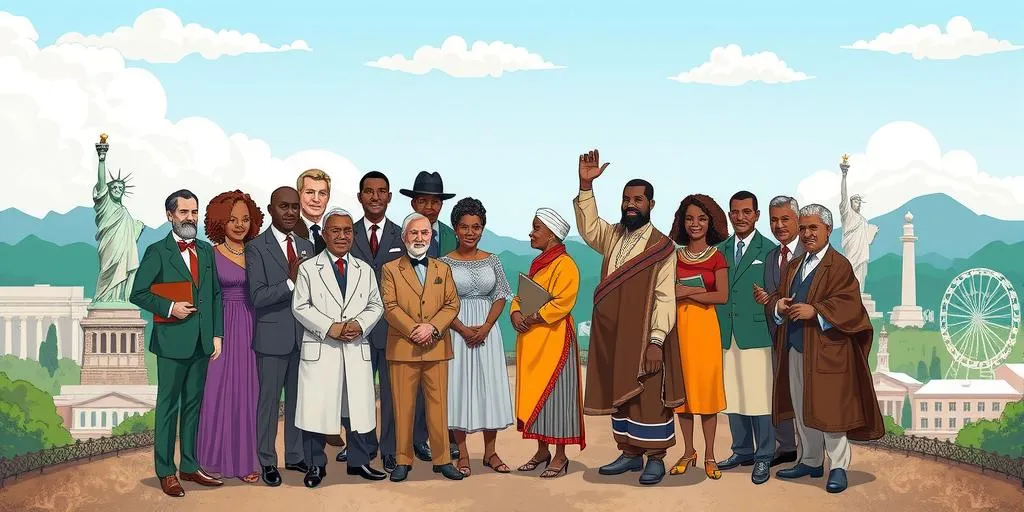
Historical figures have played a crucial role in shaping the identity and values of America. George Washington, the first President, set the standard for leadership and republican governance after leading the Revolutionary War. Abraham Lincoln, the 16th President, is remembered for his leadership during the Civil War and his commitment to abolishing slavery, notably through the Emancipation Proclamation. Martin Luther King Jr. emerged as a powerful voice for civil rights, advocating for equality and justice through nonviolent protest, with his “I Have a Dream” speech inspiring generations. Susan B. Anthony was pivotal in the women’s suffrage movement, tirelessly working for women’s right to vote and laying a foundation for future gender equality advancements. Thomas Jefferson, as the principal author of the Declaration of Independence and third President, championed the ideals of democracy and individual rights, significantly influencing American political thought and expanding the nation through the Louisiana Purchase.
2. George Washington: A Founding Father
George Washington, revered as the first President of the United States, played a crucial role in the birth of the nation. As a commanding general during the American Revolutionary War, he led the colonies to victory against British rule. His strategic acumen and steadfast commitment to the ideals of democracy helped to secure independence for the United States. Washington’s leadership extended beyond the battlefield; he set significant precedents for the presidency that still resonate today. He emphasized the importance of a non-partisan government and warned against political factionalism in his farewell address. Washington’s legacy as a Founding Father is marked by his dedication to republican principles, which laid the groundwork for the democratic governance we know today.
3. Abraham Lincoln: Leader During the Civil War
Abraham Lincoln, the 16th President of the United States, is often regarded as one of the nation’s greatest leaders, particularly for his role during the Civil War. His presidency, which lasted from 1861 to 1865, was marked by the intense conflict between the Northern states and the Southern states, primarily over issues like slavery and states’ rights. Lincoln’s commitment to preserving the Union was unwavering, and he took decisive action to ensure its survival.
One of his most significant contributions was the issuance of the Emancipation Proclamation in 1863, which declared that all slaves in Confederate-held territory were to be set free. This bold move not only aimed to weaken the Confederacy but also reframed the war’s purpose to include the fight against slavery, making it a moral battle as well.
Lincoln’s ability to communicate effectively was another key aspect of his leadership. His speeches, particularly the Gettysburg Address, are celebrated for their eloquence and depth, emphasizing the principles of equality and national unity. He reminded Americans that the nation was founded on the idea that all men are created equal, which resonated deeply during a time of division.
Despite facing immense challenges and criticism, Lincoln’s steadfast resolve and vision for a united nation left a lasting legacy that continues to inspire leaders and citizens alike. His efforts not only led to the preservation of the Union but also laid the groundwork for the eventual abolition of slavery, fundamentally reshaping the American landscape.
4. Martin Luther King Jr.: Voice for Civil Rights
Martin Luther King Jr. was a central figure in the American civil rights movement, advocating for racial equality through nonviolent resistance. His leadership during the 1960s helped to challenge systemic racism and segregation in the United States. King’s powerful speeches, particularly his iconic “I Have a Dream” address delivered during the 1963 March on Washington, called for an end to racism and for civil and economic rights for all. His vision of a racially integrated and harmonious America resonated deeply, inspiring countless individuals to join the fight for justice. King’s commitment to peaceful protest not only influenced the civil rights movement but also set a standard for activism worldwide, demonstrating the power of love and forgiveness in the face of hatred. His legacy continues to inspire new generations to advocate for equality and justice.
5. Susan B. Anthony: Pioneer for Women’s Voting Rights
Susan B. Anthony was a key figure in the fight for women’s voting rights in the United States. Born in 1820, she dedicated her life to advocating for women’s suffrage, believing that women deserved the same rights as men, especially the right to vote. In 1872, she boldly cast a ballot in the presidential election, an act of civil disobedience that led to her arrest. Despite facing significant opposition and ridicule, Anthony continued to campaign tirelessly, co-founding the National Woman Suffrage Association and delivering powerful speeches that inspired many. Her efforts helped pave the way for the eventual passage of the 19th Amendment in 1920, which granted women the right to vote. Through her relentless dedication and courage, Anthony became a symbol of the women’s rights movement, leaving a lasting legacy that continues to influence gender equality efforts today.
6. Thomas Jefferson: Architect of American Democracy
Thomas Jefferson, the third President of the United States, is often celebrated as the architect of American democracy. As the principal author of the Declaration of Independence, he articulated the revolutionary ideas of liberty and equality that would become cornerstones of American identity. Jefferson’s vision extended beyond just political philosophy; he believed in the importance of education and enlightenment as tools for a free society. His presidency saw the Louisiana Purchase, which doubled the size of the nation and opened vast lands for exploration and settlement. Jefferson’s emphasis on individual rights and limited government has had a lasting impact on American political thought, influencing the nation’s trajectory well into the future.
7. Contemporary Figures Influencing Modern America

Contemporary America is profoundly shaped by influential figures who span various fields, from politics and entertainment to technology and activism. Barack Obama, the 44th President, broke barriers as the first African American president, advocating for healthcare reforms and social justice, which resonate with many today. In media, Oprah Winfrey not only transformed daytime television but also became a powerful voice for empowerment and philanthropy, inspiring countless individuals to pursue their dreams.
Elon Musk is another pivotal figure, known for pushing the limits of technology with companies like Tesla and SpaceX. His vision for sustainable energy and space exploration captivates the imagination and drives innovation. Meanwhile, Beyoncé stands out not just as a musical icon but also as a cultural leader addressing issues of race and gender through her art, encouraging social change.
Though not American by birth, Greta Thunberg’s environmental activism has made waves in the U.S., rallying young people to demand urgent action on climate change. Her influence compels a conversation about sustainability and responsibility that extends beyond borders. These figures illustrate the diverse ways individuals can impact society, shaping the values and future of modern America.
- Activism and social justice movements
- Contributions to popular culture
- Innovations in technology and business
- Influence on public policy and opinion
- Philanthropy and community impact
- Role in shaping future generations
- Engagement in global issues such as climate change
8. Barack Obama: First African American President
Barack Obama served as the 44th President of the United States from 2009 to 2017, making history as the first African American to hold the office. His election marked a significant moment in American history, representing progress in the nation’s long journey toward racial equality. Obama’s presidency was characterized by ambitious domestic policies, notably the Affordable Care Act, which aimed to expand healthcare coverage to millions of uninsured Americans. He also made notable strides in foreign policy, such as the Iran nuclear deal and the re-establishment of diplomatic relations with Cuba. Throughout his time in office, Obama emphasized the importance of unity and hope, often using his oratory skills to inspire both Americans and people around the world. His legacy continues to influence discussions about race, equality, and healthcare in America.
9. Oprah Winfrey: Impact on Media and Society
Oprah Winfrey is one of the most influential figures in American media and culture. She transformed daytime television with her iconic talk show, “The Oprah Winfrey Show,” which ran for 25 years. Through her platform, she tackled important social issues, shared personal stories, and connected with audiences on a deep emotional level. Winfrey’s ability to engage with her guests and viewers made her a trusted voice, leading to a profound impact on public discourse around topics like race, gender, and mental health.
Beyond television, Oprah has made significant contributions to literature and film. She founded the Oprah Winfrey Network (OWN), which continues to inspire and entertain millions. Her book club has propelled numerous titles to bestseller status, influencing reading habits across the nation. Furthermore, her philanthropic efforts, including the Oprah Winfrey Foundation and the Oprah Winfrey Operating Foundation, focus on education and empowerment for underprivileged communities, showcasing her commitment to social change. Winfrey’s legacy is not just in entertainment but also in her role as a catalyst for conversation and progress in society.
10. Elon Musk: Innovator in Technology and Space
Elon Musk is a prominent entrepreneur and the CEO of Tesla and SpaceX, known for his groundbreaking contributions to technology and space exploration. Born in South Africa, Musk moved to the U.S. to pursue his ambitions in business and innovation. At Tesla, he has been a driving force behind the electric vehicle revolution, pushing for sustainable energy and making electric cars desirable and accessible to the average consumer. His vision extends beyond Earth; with SpaceX, he aims to make space travel possible for everyone and is working on missions to Mars. Musk’s ideas, like the Hyperloop and advancements in solar energy, demonstrate his commitment to solving some of the world’s most pressing issues. His work not only transforms industries but also inspires a new generation to think big and innovate.
11. Beyoncé: Cultural Icon and Activist
Beyoncé is not just a global music superstar but also a significant cultural icon and activist. Her influence extends beyond the music charts into social and political realms, where she uses her platform to advocate for issues such as feminism, racial equality, and social justice. Through powerful songs like “Formation” and her visual album “Lemonade,” she highlights the struggles and triumphs of Black women, sparking conversations about identity and empowerment. Beyond her music, Beyoncé is involved in various philanthropic efforts, including her work with the BeyGOOD Foundation, which supports education, disaster relief, and social justice initiatives. Her ability to blend entertainment with activism has made her a role model for many, inspiring a new generation to take a stand for their beliefs.
12. Greta Thunberg: Climate Change Advocate
Greta Thunberg, a Swedish climate activist, has become a prominent figure in the fight against climate change, greatly influencing discussions in America and around the world. Starting her activism at a young age, Thunberg gained international attention in 2018 when she began striking from school to protest outside the Swedish parliament, demanding stronger action on climate issues. Her straightforward message, delivered in passionate speeches, resonates particularly with younger generations, urging them to take a stand for their future. Thunberg’s ability to mobilize millions through global movements like “Fridays for Future” has sparked conversations about climate policy in the U.S., challenging leaders to prioritize environmental sustainability. Her participation in high-profile events, including the United Nations Climate Action Summit, has also put pressure on governments to address climate change aggressively, making her a key player in the ongoing dialogue about our planet’s future.
13. Influential Business Leaders and Their Impact
Business leaders have significantly shaped the American economy and culture, leaving lasting legacies through their innovation and leadership. For instance, Jeff Bezos transformed how we shop and consume media by founding Amazon, which redefined the retail landscape and pushed the boundaries of e-commerce. His vision of a customer-first approach and rapid delivery systems changed consumer expectations across the globe. Similarly, Steve Jobs, co-founder of Apple Inc., was instrumental in revolutionizing technology with products like the iPhone and iPad. His focus on design and user experience not only set standards in technology but also changed how people interact with devices daily.
These leaders are not just business figures; they are cultural icons who have influenced how we live, communicate, and consume information. Their success stories inspire countless entrepreneurs and innovators, driving the next generation to pursue their dreams with the same passion and creativity. The impact of these business leaders extends beyond profits; they have shaped the very fabric of American society.
14. Jeff Bezos: Revolutionizing E-commerce
Jeff Bezos, the founder of Amazon, has fundamentally changed the way people shop and consume products. Starting from a small online bookstore in 1994, he transformed Amazon into the world’s largest e-commerce platform, offering everything from books to groceries to electronics. His emphasis on customer service, fast shipping, and innovative technology has set new standards in retail. Bezos also pioneered the concept of cloud computing through Amazon Web Services, making it easier for businesses to manage their technology needs. His vision of a customer-centric business model has influenced countless entrepreneurs and reshaped the global retail landscape, making shopping more accessible and convenient for millions.
15. Steve Jobs: Visionary in Technology
Steve Jobs, co-founder of Apple Inc., is often regarded as one of the most influential figures in the technology sector. His relentless drive for innovation and excellence led to the creation of iconic products that have reshaped how we communicate, work, and entertain ourselves. Under his leadership, Apple launched the iPhone in 2007, which revolutionized the smartphone industry and changed the way people interact with technology. Jobs also played a crucial role in the development of the iPad and MacBook, which combined sleek design with powerful functionality.
Jobs was known for his unique approach to product design and marketing. He believed in creating products that were not only functional but also aesthetically pleasing and user-friendly. His philosophy of ‘thinking differently‘ encouraged creativity and pushed boundaries, inspiring countless entrepreneurs and tech enthusiasts. The impact of his work extends beyond just consumer electronics; it has influenced various industries, from music with iTunes to digital publishing with the App Store. Jobs’ legacy as a visionary continues to inspire new generations of innovators.
16. Malala Yousafzai: Champion for Girls’ Education
Malala Yousafzai, a Pakistani-born education activist, has become a prominent figure in the fight for girls’ education, especially in the United States. After surviving an assassination attempt by the Taliban at just 15 years old, she transformed her pain into a powerful message advocating for the right to education for all girls. Her story resonated globally, inspiring initiatives and policies that focus on educational access. Malala co-founded the Malala Fund, which works to ensure girls have the opportunity to learn and lead. Through her activism, she emphasizes the importance of education in breaking the cycle of poverty and empowering women. Her work has not only raised awareness but has also influenced educational reform and funding, making her a significant voice in the ongoing dialogue about gender equality and education.
17. Understanding America’s Complex Landscape of Influencers
America’s cultural and social landscape is shaped by a diverse range of influencers spanning various fields. From politics to entertainment, these individuals have left significant marks on society. For instance, George Washington and Abraham Lincoln laid the groundwork for democracy and civil rights, influencing generations. In contemporary times, figures like Barack Obama and Oprah Winfrey have not only shaped public opinion but also inspired movements for change, whether in health care or media representation. Technological innovators like Elon Musk and Steve Jobs have transformed how we live and communicate, pushing boundaries of possibility. Additionally, activists like Greta Thunberg and Malala Yousafzai advocate for pressing global issues, mobilizing youth and encouraging policy shifts. This intricate web of influences showcases how interconnected ideas and leadership drive America forward.
Frequently Asked Questions
1. Who are some of the most famous people in America?
Some of the most famous people in America include historical figures like George Washington and Abraham Lincoln, as well as entertainers like Oprah Winfrey and Tom Hanks.
2. What makes a person famous in America?
A person can become famous in America through achievements in various fields such as politics, sports, entertainment, and business, or by impacting culture and society.
3. Are there any recent figures who have gained fame?
Yes, recent figures like technology entrepreneurs such as Elon Musk and celebrities like Taylor Swift have gained significant fame in America.
4. How do celebrities impact American culture?
Celebrities often shape trends, influence opinions, and inspire the public through their work, lifestyle, and social media presence.
5. Can anyone become a well-known figure in America?
Yes, anyone can become a well-known figure in America with talent, dedication, and sometimes a bit of luck, as seen with many who rose from humble beginnings.
TL;DR This blog post explores prominent figures in American history and contemporary society, highlighting key contributors such as George Washington, Abraham Lincoln, Martin Luther King Jr., and Susan B. Anthony for their roles in shaping America. It also features modern influencers like Barack Obama, Oprah Winfrey, Elon Musk, and Beyoncé, who have impacted various fields. Additionally, it recognizes figures like Jeff Bezos and Steve Jobs in business, as well as Malala Yousafzai and Greta Thunberg in activism. Overall, these individuals collectively represent the dynamic and multifaceted landscape of American influence.


