Now Reading: Unveiling the Mighty 22 Antonov: A Giant in the Skies
-
01
Unveiling the Mighty 22 Antonov: A Giant in the Skies
Unveiling the Mighty 22 Antonov: A Giant in the Skies

The Antonov An-22, a remarkable feat of engineering, emerged from the Soviet Union during the 1960s, a period marked by intense competition in aerospace technology. The aircraft was conceived as a response to the need for a heavy transport aircraft capable of carrying oversized cargo, particularly for military applications. The design process began in 1959 under the leadership of Oleg Antonov, a prominent Soviet aircraft designer.
The An-22 was intended to serve both military and civilian purposes, reflecting the dual-use nature of many Soviet aerospace projects during the Cold War. The first prototype took to the skies on February 27, 1965, marking a significant milestone in aviation history. The An-22 was not only the world’s largest turboprop aircraft at the time but also showcased innovative design features that would influence future aircraft development.
Its successful maiden flight demonstrated the potential for large-scale air transport, paving the way for subsequent models and variants. The An-22’s development was a testament to Soviet engineering prowess and ambition, as it aimed to meet the logistical demands of an expanding military and civilian aviation market.
Key Takeaways
- The Antonov 22 revolutionized heavy air transport with its innovative design and unmatched cargo capacity.
- It played a crucial role in both military operations and humanitarian relief missions worldwide.
- Its advanced features set new standards in aviation technology and influenced future aircraft development.
- The aircraft holds a significant place in aviation history and continues to be relevant in modern aerospace applications.
- Beyond its technical achievements, the Antonov 22 carries cultural and symbolic importance globally.
The Design and Specifications of the Antonov 22
The Antonov An-22 is characterized by its distinctive design, which includes a high-wing configuration and four powerful Kuznetsov NK-12 turboprop engines. These engines are among the most powerful ever built for an aircraft, providing the An-22 with impressive performance capabilities. The aircraft measures approximately 57 meters in length, with a wingspan of 60 meters, making it a colossal presence in the sky.
Its maximum takeoff weight is around 250,000 pounds (113,400 kg), allowing it to transport substantial payloads over considerable distances. The An-22’s fuselage is designed to accommodate oversized cargo, featuring a unique nose that can be raised to facilitate loading and unloading. This innovative feature allows for the transportation of large military equipment, such as helicopters and armored vehicles, as well as humanitarian supplies during disaster relief operations.
The aircraft’s cargo hold is approximately 30 meters long and 4 meters wide, providing ample space for various types of cargo. Additionally, the An-22 is equipped with advanced avionics systems that enhance navigation and operational efficiency.
The Antonov 22’s Role in Military and Civilian Operations

Throughout its operational history, the Antonov An-22 has played a crucial role in both military and civilian aviation sectors. In military applications, it has been utilized by the Soviet Air Force and later by various countries that inherited Soviet military assets. The An-22’s ability to transport heavy and oversized cargo made it an invaluable asset for logistical support during military operations.
It has been deployed in various conflicts, showcasing its versatility and reliability in challenging environments. In civilian operations, the An-22 has been employed by several cargo airlines and freight companies around the world. Its capacity to carry large shipments has made it a preferred choice for transporting goods that cannot be accommodated by standard cargo aircraft.
The An-22 has also been used in humanitarian missions, delivering essential supplies to regions affected by natural disasters or conflict. Its dual-use capabilities highlight its significance in both military logistics and commercial aviation.
The Antonov 22’s Impressive Cargo Capacity
One of the most remarkable features of the Antonov An-22 is its impressive cargo capacity. With a maximum payload capacity of approximately 80 tons (72,000 kg), it can transport a wide range of cargo types, from military vehicles to humanitarian supplies. The aircraft’s spacious cargo hold allows for the transportation of oversized items that would be impossible to move using conventional cargo planes.
The An-22’s unique loading system further enhances its cargo capabilities. The nose of the aircraft can be raised to create a ramp for easy access to the cargo hold, allowing for efficient loading and unloading operations. This feature is particularly beneficial in remote locations where ground handling equipment may be limited.
The versatility of the An-22’s cargo capacity has made it an essential asset for various industries, including defense, construction, and humanitarian aid.
The Antonov 22’s Notable Features and Innovations
| Metric | Value | Unit |
|---|---|---|
| Model | An-22 An-22 “Antei” | – |
| Role | Heavy military transport aircraft | – |
| Manufacturer | Antonov | – |
| First flight | February 27, 1965 | – |
| Length | 57.9 | meters |
| Wingspan | 64.4 | meters |
| Height | 12.53 | meters |
| Maximum takeoff weight | 250,000 | kilograms |
| Payload capacity | 80,000 | kilograms |
| Maximum speed | 740 | km/h |
| Range (with max payload) | 5,000 | kilometers |
| Engines | 4 × Kuznetsov NK-12 turboprop | – |
| Engine power | 15,000 | shaft horsepower each |
The Antonov An-22 is replete with notable features and innovations that set it apart from other aircraft of its time.
The Kuznetsov NK-12 engines are not only powerful but also relatively fuel-efficient compared to turbojet engines, allowing for longer flight ranges without compromising performance.
Another innovative aspect of the An-22 is its advanced wing design, which incorporates a high aspect ratio and winglets that enhance aerodynamic efficiency. This design contributes to improved fuel economy and overall flight performance. Additionally, the aircraft is equipped with sophisticated avionics systems that enable precise navigation and communication capabilities, ensuring safe operations in various weather conditions.
The Antonov 22’s Impact on Aviation History
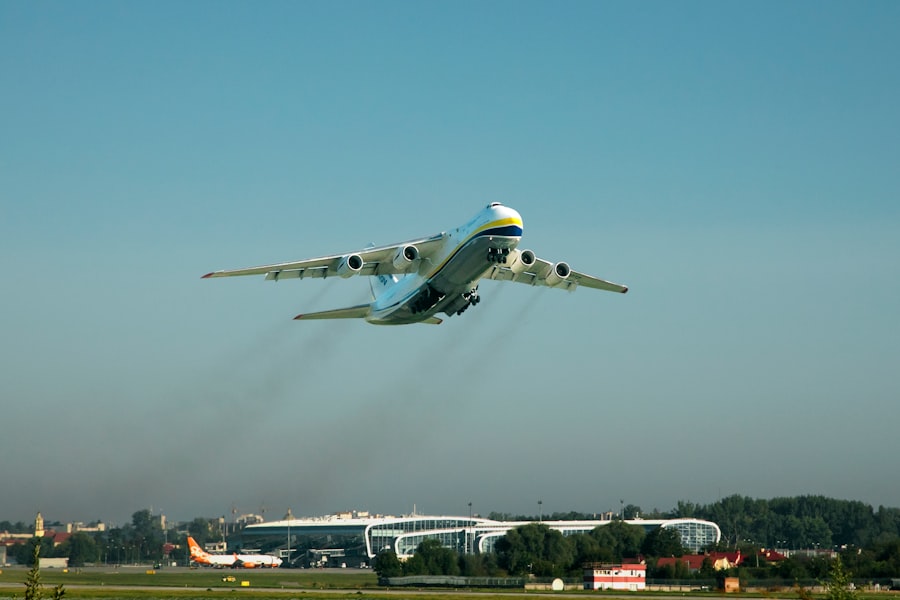
The Antonov An-22 has left an indelible mark on aviation history as one of the largest turboprop aircraft ever built. Its introduction into service challenged conventional notions of air transport capabilities and set new standards for heavy-lift operations. The An-22’s design principles have influenced subsequent aircraft developments, particularly in the realm of cargo transport.
Moreover, the An-22’s operational success demonstrated the feasibility of large-scale air transport for both military and civilian applications. It paved the way for future heavy-lift aircraft designs, including jet-powered models that would eventually dominate the market. The legacy of the An-22 continues to resonate within the aviation community as engineers and designers draw inspiration from its innovative features and operational versatility.
The Antonov 22’s Global Reach and Influence
The global reach of the Antonov An-22 extends far beyond its origins in the Soviet Union. Over the years, various countries have operated this remarkable aircraft, utilizing it for diverse purposes ranging from military logistics to commercial freight transport. Its ability to operate in challenging environments has made it a valuable asset for nations with limited access to modern infrastructure.
The An-22 has also played a significant role in international collaborations and partnerships. Its participation in joint military exercises and humanitarian missions has fostered cooperation among nations while showcasing its capabilities on a global stage. As a result, the An-22 has become synonymous with heavy-lift aviation, influencing how countries approach logistics and transportation challenges.
The Antonov 22’s Role in Humanitarian and Relief Missions
In addition to its military and commercial applications, the Antonov An-22 has been instrumental in humanitarian efforts worldwide. Its capacity to transport large quantities of supplies makes it an ideal choice for disaster relief missions. Whether delivering food, medical supplies, or shelter materials, the An-22 has proven its worth in times of crisis.
The aircraft’s ability to operate from unpaved airstrips further enhances its effectiveness in humanitarian missions. In remote areas where traditional cargo planes may struggle to land, the An-22 can provide vital assistance by delivering essential supplies directly to those in need. This capability has made it a lifeline for communities affected by natural disasters or conflict situations.
The Antonov 22’s Legacy and Continued Relevance
The legacy of the Antonov An-22 endures as it continues to serve various roles in aviation today. While newer aircraft models have emerged since its introduction, the An-22 remains relevant due to its unique capabilities and versatility. Many operators still rely on this aircraft for specialized transport needs that require heavy-lift capabilities.
Its design principles continue to influence modern aircraft designs, particularly in terms of cargo transport efficiency and operational flexibility. As long as there are demands for heavy-lift capabilities, the Antonov An-22 will maintain its place in aviation history.
The Antonov 22’s Future in Aviation and Aerospace Technology
Looking ahead, the future of the Antonov An-22 may involve modernization efforts aimed at enhancing its performance and efficiency. As advancements in aerospace technology continue to evolve rapidly, there may be opportunities to retrofit existing An-22 aircraft with updated avionics systems or more efficient engines. Additionally, ongoing interest in sustainable aviation practices may lead to discussions about alternative fuel options or hybrid propulsion systems for heavy-lift aircraft like the An-22.
As environmental concerns become increasingly prominent within the aviation industry, exploring ways to reduce emissions while maintaining operational capabilities will be crucial for ensuring the longevity of such iconic aircraft.
The Antonov 22’s Cultural and Symbolic Significance
Beyond its technical achievements and operational capabilities, the Antonov An-22 holds cultural significance as a symbol of Soviet engineering excellence during a pivotal era in aviation history. It represents not only technological innovation but also national pride for those who contributed to its development. The aircraft has become an enduring icon within aviation circles and among enthusiasts worldwide.
Its distinctive appearance and impressive performance have captured imaginations across generations, solidifying its place as a beloved figure in aviation lore. As such, the Antonov An-22 transcends mere functionality; it embodies a spirit of exploration and achievement that continues to inspire future generations of engineers and aviators. In summary, the Antonov An-22 stands as a testament to human ingenuity and ambition within aviation history.
From its inception as a heavy-lift transport solution to its ongoing relevance today, this remarkable aircraft has shaped logistics operations across military and civilian sectors alike while leaving an indelible mark on global aviation culture.
The Antonov An-22, known for its impressive cargo capacity and unique design, has played a significant role in aviation history. For those interested in understanding the broader implications of significant events and holidays that shape our world, you might find it insightful to read about the significance of federal holidays in the United States. Check out this article on