Now Reading: 5G: The Future of High-Speed Connectivity
-
01
5G: The Future of High-Speed Connectivity
5G: The Future of High-Speed Connectivity

5G technology represents the fifth generation of mobile network technology, succeeding its predecessor, 4G LTE. It is designed to provide significantly faster data transfer rates, reduced latency, and enhanced connectivity for a multitude of devices. The architecture of 5G networks is built on a combination of new radio frequencies, advanced antenna technologies, and a more efficient network infrastructure.
This evolution in mobile technology is not merely an incremental upgrade; it is a transformative leap that enables a wide array of applications and services that were previously unattainable. The core features of 5G include ultra-reliable low-latency communication (URLLC), enhanced mobile broadband (eMBB), and massive machine-type communications (mMTC). These capabilities allow for seamless connectivity across various sectors, including telecommunications, healthcare, transportation, and entertainment.
The deployment of 5G networks is expected to revolutionize how individuals and businesses interact with technology, paving the way for innovations that will shape the future.
Key Takeaways
- 5G technology significantly boosts internet speeds and connectivity.
- It enables advancements in IoT, virtual reality, and autonomous vehicles.
- 5G plays a crucial role in developing smart cities and enhanced mobile broadband.
- Edge computing benefits from 5G by reducing latency and improving data processing.
- Security and privacy challenges arise with 5G, requiring careful management.
The Impact of 5G on Internet Speeds
One of the most significant advantages of 5G technology is its ability to deliver unprecedented internet speeds. Theoretically, 5G can achieve download speeds of up to 10 Gbps, which is approximately 100 times faster than 4G LTE.
For instance, a high-definition movie that would take several minutes to download on a 4G network can be completed in mere seconds on a 5G connection. Moreover, the reduced latency associated with 5G networks—often as low as one millisecond—enables real-time communication and interaction. This is particularly beneficial for applications requiring instantaneous feedback, such as online gaming or video conferencing.
The combination of high speeds and low latency creates an environment conducive to innovation, allowing developers to create applications that leverage these capabilities for enhanced user experiences.
5G and the Internet of Things
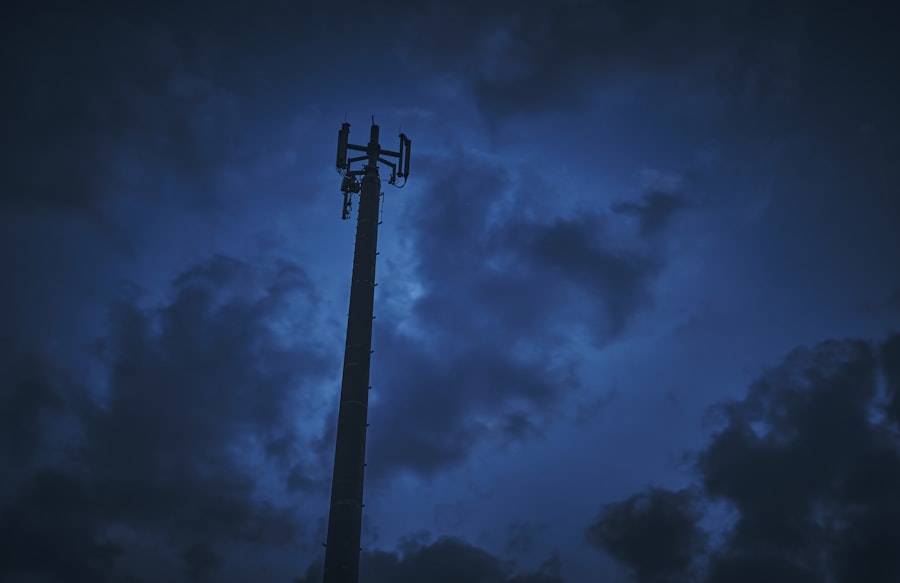
The Internet of Things (IoT) refers to the interconnected network of devices that communicate and exchange data with one another. 5G technology plays a pivotal role in expanding the IoT ecosystem by providing the necessary bandwidth and connectivity to support millions of devices simultaneously. With its ability to handle massive machine-type communications (mMTC), 5G can connect a vast array of sensors, smart appliances, and wearable devices without compromising performance.
This enhanced connectivity enables smarter cities, where traffic lights, public transportation systems, and energy grids can communicate in real-time to optimize efficiency and reduce congestion. For example, smart traffic management systems can analyze data from connected vehicles and adjust traffic signals accordingly to minimize delays. Additionally, in industrial settings, IoT devices powered by 5G can facilitate predictive maintenance, reducing downtime and improving operational efficiency.
5G and Virtual Reality
Virtual reality (VR) technology relies heavily on high-speed internet connections to deliver immersive experiences.
This capability opens up new possibilities for gaming, training simulations, and remote collaboration.
For instance, in the gaming industry, 5G can enable multiplayer VR experiences where players from different locations can interact seamlessly within the same virtual space. In educational settings, VR can be utilized for remote learning experiences that simulate real-world scenarios, enhancing engagement and retention. Furthermore, industries such as healthcare can leverage VR for training medical professionals or conducting remote consultations with patients.
The Potential of 5G in Healthcare
| Metric | Value | Unit | Description |
|---|---|---|---|
| Maximum Download Speed | 10 | Gbps | Peak theoretical download speed of 5G networks |
| Maximum Upload Speed | 3 | Gbps | Peak theoretical upload speed of 5G networks |
| Latency | 1 | ms | Typical end-to-end latency in 5G networks |
| Frequency Bands | 600 MHz – 52 GHz | GHz | Range of frequencies used by 5G technology |
| Connection Density | 1,000,000 | devices/km² | Number of devices supported per square kilometer |
| Network Slicing | Supported | – | Capability to create multiple virtual networks on a single physical 5G network |
| Energy Efficiency | Up to 90% | % | Improvement in energy efficiency compared to 4G |
The healthcare sector stands to benefit immensely from the implementation of 5G technology. With its ability to support high-speed data transfer and low-latency communication, 5G can facilitate telemedicine services, remote patient monitoring, and real-time data sharing among healthcare providers. This transformation can lead to improved patient outcomes and more efficient healthcare delivery.
Telemedicine has gained significant traction in recent years, particularly during the COVID-19 pandemic. With 5G, healthcare providers can conduct high-definition video consultations with patients without interruptions or delays. Additionally, wearable devices equipped with sensors can continuously monitor vital signs and transmit data to healthcare professionals in real-time.
This capability allows for proactive interventions and personalized treatment plans based on individual patient needs.
5G and Autonomous Vehicles

The development of autonomous vehicles relies heavily on advanced communication technologies to ensure safety and efficiency on the roads. 5G technology plays a crucial role in enabling vehicle-to-everything (V2X) communication, allowing vehicles to communicate with each other as well as with infrastructure such as traffic lights and road signs. This connectivity enhances situational awareness and enables real-time decision-making.
For example, autonomous vehicles equipped with 5G technology can receive updates about traffic conditions or potential hazards ahead, allowing them to adjust their routes accordingly. Furthermore, V2X communication can facilitate coordinated movements among multiple vehicles to improve traffic flow and reduce accidents. As the automotive industry continues to evolve towards automation, the integration of 5G will be essential for realizing the full potential of self-driving cars.
The Role of 5G in Smart Cities
Smart cities leverage technology to enhance urban living through improved infrastructure, services, and sustainability. The implementation of 5G networks is fundamental to the development of smart city initiatives by providing the necessary connectivity for various applications. From smart lighting systems that adjust based on occupancy to waste management solutions that optimize collection routes based on real-time data, 5G enables cities to operate more efficiently.
Moreover, public safety can be significantly enhanced through the use of connected surveillance systems powered by 5G technology. These systems can provide real-time monitoring and analytics to law enforcement agencies, improving response times during emergencies. Additionally, smart public transportation systems can utilize 5G connectivity to provide passengers with real-time updates on schedules and delays.
5G and Enhanced Mobile Broadband
Enhanced mobile broadband (eMBB) is one of the key use cases for 5G technology. It focuses on providing high-speed internet access to users on mobile devices while ensuring a seamless experience across various applications. With eMBB capabilities, users can enjoy ultra-high-definition video streaming, augmented reality experiences, and faster downloads on their smartphones or tablets.
The demand for mobile data continues to grow exponentially as consumers increasingly rely on their devices for entertainment, work, and communication. 5G networks are designed to accommodate this demand by offering higher capacity and improved coverage compared to previous generations. As a result, users can expect a more reliable connection even in densely populated areas or during peak usage times.
5G and Edge Computing
Edge computing refers to the practice of processing data closer to its source rather than relying solely on centralized cloud servers. The integration of edge computing with 5G technology enhances data processing capabilities by reducing latency and improving response times for applications that require real-time analysis. This synergy is particularly beneficial for industries such as manufacturing, logistics, and healthcare.
For instance, in manufacturing environments equipped with IoT sensors, edge computing allows for immediate analysis of production data to identify inefficiencies or potential issues. By processing data at the edge rather than sending it to a distant cloud server, manufacturers can make timely decisions that enhance productivity and reduce costs. Similarly, in healthcare settings, edge computing can facilitate rapid analysis of patient data collected from wearable devices, enabling prompt interventions when necessary.
The Security and Privacy Implications of 5G
As with any technological advancement, the rollout of 5G networks raises important security and privacy concerns. The increased connectivity provided by 5G means that more devices are susceptible to cyberattacks if not adequately secured. Additionally, the vast amount of data generated by connected devices poses challenges related to data privacy and protection.
To mitigate these risks, it is essential for stakeholders—including network providers, device manufacturers, and policymakers—to implement robust security measures throughout the entire ecosystem. This includes encryption protocols for data transmission, regular software updates to address vulnerabilities, and comprehensive privacy policies that govern data collection and usage practices. Public awareness campaigns are also crucial in educating users about potential risks associated with connected devices.
The Future of 5G and Beyond
The future of 5G technology holds immense promise as it continues to evolve beyond its initial deployment phase. As more industries adopt this transformative technology, we can expect innovations that will redefine how we live and work. Future advancements may include the integration of artificial intelligence (AI) with 5G networks to enable smarter decision-making processes across various sectors.
Moreover, as research progresses into sixth-generation (6G) technology, we may witness even greater enhancements in speed, capacity, and connectivity. The convergence of technologies such as quantum computing with advanced wireless networks could lead to breakthroughs that are currently unimaginable. Ultimately, the ongoing development of 5G—and its successors—will play a pivotal role in shaping our digital future.
In summary, 5G technology represents a significant leap forward in mobile connectivity with far-reaching implications across various sectors including healthcare, transportation, entertainment, and urban development. Its ability to deliver high-speed internet access with low latency enables innovative applications such as telemedicine and autonomous vehicles while enhancing smart city initiatives. However, addressing security concerns remains paramount as we navigate this new technological landscape.
As we look ahead to the future of connectivity beyond 5G, we anticipate further advancements that will continue to transform our world.
As the rollout of 5G technology continues to transform communication and connectivity, it’s essential to consider its broader implications on society. For instance, the recent article on Juneteenth, titled Juneteenth: America’s Newest Federal Holiday, explores how advancements in technology, including 5G, can enhance awareness and education about significant cultural milestones. This intersection of technology and social progress highlights the potential of 5G to not only improve connectivity but also foster a more informed and engaged society.
FAQs
What is 5G?
5G is the fifth generation of mobile network technology, designed to provide faster speeds, lower latency, and greater connectivity compared to previous generations like 4G LTE.
How fast is 5G compared to 4G?
5G can offer speeds up to 10 gigabits per second, which is significantly faster than 4G, which typically provides speeds up to 100 megabits per second.
What are the main benefits of 5G?
The main benefits of 5G include faster internet speeds, reduced latency for real-time applications, increased network capacity to support more devices, and improved reliability.
Is 5G available everywhere?
5G availability varies by region and country. While many urban areas have 5G coverage, rural and remote areas may still rely on 4G or earlier technologies.
What devices support 5G?
Many modern smartphones, tablets, and some laptops support 5G connectivity. Users need a 5G-compatible device and a 5G service plan to access the network.
Does 5G affect battery life?
Using 5G can consume more battery power compared to 4G, especially when the device is searching for or switching between networks, but improvements in technology are helping to reduce this impact.
Is 5G safe?
According to health organizations like the World Health Organization (WHO), 5G technology is safe and meets international guidelines for exposure to radiofrequency electromagnetic fields.
How does 5G impact other technologies?
5G enables advancements in technologies such as the Internet of Things (IoT), autonomous vehicles, smart cities, virtual reality (VR), and augmented reality (AR) by providing faster and more reliable connectivity.
What frequencies does 5G use?
5G operates on a range of frequency bands, including low-band (below 1 GHz), mid-band (1-6 GHz), and high-band millimeter wave (above 24 GHz), each offering different coverage and speed characteristics.
Can 5G replace Wi-Fi?
While 5G offers high-speed mobile internet, it is not intended to replace Wi-Fi but rather to complement it by providing connectivity in areas where Wi-Fi is unavailable or impractical.